Greensboro lawns have a personality. Piedmont clay holds water a beat too long after a thunderstorm, then bakes dry under July sun. Oak roots compete with fescue. Street trees shade one zone at 3 p.m. while the back corner gets full sun and wind. A good irrigation service here earns its keep by reading those patterns and tuning hardware and schedules to match. The right plan protects your landscape investment and trims your water bill; the wrong one leaves you with fungus, brown patches, and a call to the city about a surprise high bill.
I’ve installed and maintained systems across Guilford County long enough to recognize what separates a fair plan from a frustrating one. Below, I’ll break down typical service tiers, what they include, realistic price ranges for Greensboro, and how to compare them without buyer’s remorse. I’ll also share where irrigation installation money actually goes, how to judge a sprinkler installation bid, and when irrigation repair is worth it versus replacement.
How Greensboro’s climate and water rates shape your plan
From April through October, Greensboro averages rain every few days, yet June through August often bring long dry stretches between pop-up storms. Evapotranspiration peaks in July. Clay soils drain slowly, then crack when dry. That volatility rewards systems designed for short, frequent cycles with smart controllers that watch weather forecasts.
City of Greensboro residential water rates step up with usage. If your irrigation controller runs blindly after a heavy rain, you pay for it twice: first in excess water costs, then in turf disease treatment. That’s why the best irrigation maintenance plans in our area include weather-based scheduling, rain sensors verified to trip correctly, and heads matched for precipitation rate. Those features cost a little more upfront but earn their keep by avoiding overwatering.
What a baseline service plan should include
Service plans vary, but a baseline Greensboro plan should promise two things: keep water moving only where it should, and prevent surprises. At minimum, expect a spring startup visit, a mid-season tune-up, and a winterization visit. The spring visit charges the system, inspects the backflow preventer, checks zone coverage, and sets initial schedules for our climate. The mid-season tune-up fixes drifted heads, clogged nozzles, and a schedule that no longer fits July heat. Winterization here isn’t about deep freeze like in Minnesota, but Greensboro still sees hard freezes. Compressed air blowouts protect valves, heads, and lateral lines from cracked housings.
Pricing depends on system size. A small residential system with six to eight zones typically sees a baseline plan in the $250 to $450 range for the year. Larger properties with 12 to 16 zones usually land between $400 and $700. Commercial or HOA sites scale from there, often priced per zone with volume discounts. Don’t chase the lowest sticker: read what’s included. If the plan excludes adjustments or basic irrigation repair work during visits, those “trip fees” can exceed the savings.
Bronze, Silver, Gold: what tiers usually mean in practice
Most Greensboro irrigation service providers package plans with tiered names. Labels vary, but the contents have predictable patterns.
A budget tier usually includes spring startup and winterization, with an option to add a mid-season check. Service calls are billable at an hourly rate plus parts. No proactive monitoring. If you’re meticulous and comfortable spotting issues early, this can work for small systems. Expect roughly $200 to $350 per year for up to eight zones, plus $95 to $135 per hour for any irrigation repair.
A mid-tier plan adds at least one in-season visit, seasonal schedule changes, and minor repairs up to a dollar cap without additional labor charges. Think nozzle swaps, head height adjustments, and wire nut replacements. In Greensboro, I often see these plans priced between $350 and $650 for most residential systems. They fit homeowners who want to set it and forget it while avoiding nickel-and-dime fees.
A premium plan folds in three to four scheduled visits, smart controller monitoring, priority scheduling, and extended labor coverage. Some include flushing drip zones each visit, replacing worn diaphragms in valves, and auditing precipitation rates annually. Expect $600 to $1,100 for larger residential systems, more if there’s extensive drip irrigation or multiple backflow assemblies. These plans make sense for higher-end landscapes and for clients who appreciate same-week response in peak season.
The best value often sits in the middle tier with clearly defined inclusions and modest parts coverage. Premium shines if it includes true monitoring, not just fancy adjectives. Ask pointed questions about what counts as “minor repair” and what the caps are.
The cost anatomy of irrigation installation in Greensboro, NC
If you’re seeking irrigation installation in Greensboro NC for the first time, it helps to know where the dollars go. Labor is the largest slice. Trenching in Piedmont clay takes patience and the right machines. Avoid crews that rush trenches, because shallow laterals lead to future repairs. Materials come next. Quality matters: schedule-40 PVC on mains, poly on laterals where it makes sense, brass or high-grade plastic valves, and matched-precipitation nozzles.
A straightforward, small yard with four to six zones, basic turf coverage, and a single backflow device typically ranges from $3,200 to $5,500. Mid-size lots with eight to ten zones and mixed beds often land between $5,500 and $8,500. Complex lots with slope, drip beds, and microclimates can exceed $10,000. The spread reflects choices: rotor versus spray, drip conversion in beds, and controller type.
Controller choice is where long-term value hides. A weather-based controller with local-weather integration saves water in Greensboro’s changeable summer. Add a wired or wireless rain sensor and soil type programming. The extra $200 to $400 bumps upfront cost but usually pays back within two or three summers via lowered water bills and less fungus in shaded zones.
Backflow installation must meet local code. Greensboro typically requires a reduced pressure zone backflow for irrigation. It needs to sit at proper elevation and be tested annually by a certified tester. Factor that test fee into your annual plan.
Sprinkler installation details that change outcomes
Head spacing and nozzle selection determine coverage. Over the years, I’ve revisited more brown spots from “spray heads at 20 feet” than I care to count. In practice, rotors should be spaced head-to-head for even overlap, and sprays should be on their own zones separate from rotors. Mixing head types on the same zone causes uneven precipitation. Slopes benefit from low precipitation rate nozzles and cycle-and-soak programming. Beds want drip irrigation, not sprays blowing water across mulch.
Valve layout influences maintenance costs. Grouping zones with similar sun and plant needs on the same valve saves water. Placing valves in accessible manifolds with shutoffs pays off when a repair is needed. I once spent an hour chasing a buried valve in a front yard because the original installer saved a few minutes by skipping a proper manifold; that hour cost more than the manifold would have.
Avoid cutting corners on wire. Use multi-strand irrigation wire with a spare conductor and waterproof connectors. Greensboro’s soil, with its freeze-thaw cycles, is unforgiving to cheap connections. Wire faults in a mature landscape mean tedious, costly tracing under roots and hardscape.
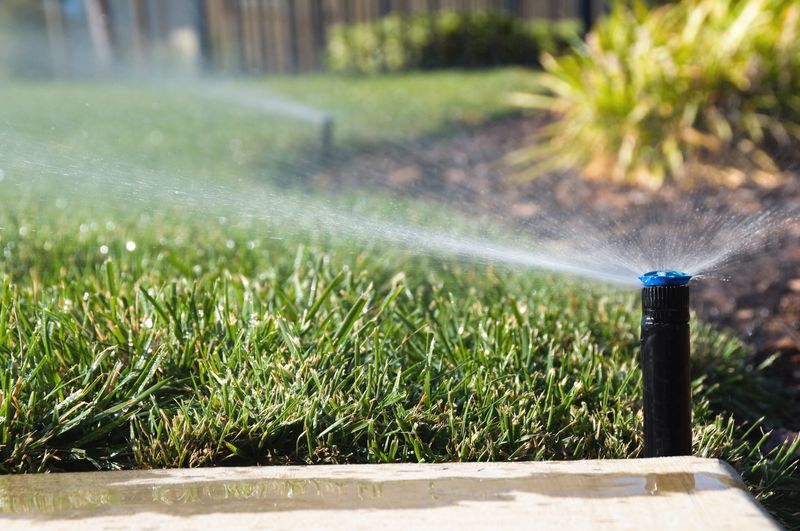
What irrigation maintenance should look like through the year
A good technician doesn’t just “turn it on.” At spring startup, they open the backflow slowly to avoid hammering, run each zone, adjust arcs and heights, clean clogged strainers, and look for weeping valves that point to tired diaphragms. They test the rain sensor. For systems with drip, they watch for telltale pressure issues: noisy emitters or uneven flow.
By early summer, they should revisit scheduling. Fescue in sun needs a different runtime than zoysia in shade. Greensboro humidity spikes in July, and fungus loves oversaturated night watering. Shifting watering to the pre-dawn and trimming runtimes helps. They’ll check for head lean from mower hits and adjust for plant growth closing in around sprays.
Come fall, the focus flips to winterization. Even in mild winters, a surprise cold snap can crack a lateral or split a spray body. Proper blowouts use regulated air pressure, usually between 50 and 60 PSI for residential systems. A rush job at high pressure can eject nozzles and damage internal seals. The final step is closing valves, tagging the controller for “off,” and leaving a service record.
Comparing service contracts: what to ask before you sign
A glossy brochure won’t tell you how headaches are handled. The best comparisons come from asking the same five or six questions to each provider and noting the clarity of their answers.
- What exactly is included at each visit, and what counts as a billable repair? Look for defined caps on included parts and labor, and make sure nozzle swaps, head height corrections, and small leak fixes are included up to a reasonable dollar amount. How do you handle scheduling and weather adjustments? A provider who proactively reschedules after heavy rain and updates programs for heatwaves saves you money and turf stress. Who performs backflow testing, and is it included? Some include testing in the plan; others schedule it through a third party. Neither is wrong, but clarity matters. What is your typical response time in peak season? A promise to respond within 48 to 72 hours beats a vague “as soon as possible.” Ask if plan tier changes your place in line. How are irrigation repair warranties handled? Parts warranty is one thing; labor warranty indicates confidence. A 1-year parts/90-day labor warranty is common, and better providers often match parts warranty with labor coverage for critical components.
You’ll notice none of those questions ask about price first. A fair price on a vague plan is more expensive than a clear price on a precise plan.
Irrigation repair: when to fix, when to plan replacement
An honest contractor won’t sell you a new system when a targeted irrigation repair will carry you for years. But there’s a line where the repair treadmill wastes money. If your controller is a 15-year-old basic timer with failing relays, upgrade it. Modern weather-based controllers save 15 to 30 percent on water in our area. If you have a zone with mixed rotors and sprays that never waters evenly, split it or re-nozzle it rather than repeatedly seeding brown spots.
Common repair costs in Greensboro: head replacements typically run $25 to $45 for parts plus a service fee; valve replacements $90 to $150 for parts plus labor; leak repairs vary wildly, from a $30 coupling fix to several hundred if the break sits under a walkway. Wire repairs add diagnostic time; plan for at least an hour of tracing plus materials.
Aging systems often benefit from a retrofit strategy rather than a tear-out. Swapping fixed-spray nozzles for high-efficiency rotary nozzles, converting shrub beds to drip, and adding a smart controller can stretch a tired system’s life five to ten years. That approach costs a fraction of full irrigation installation and usually shows immediate gains in uniformity.
Smart features that earn their keep
Greensboro’s microstorms and clay soil make two smart features stand out: rain shutoff and weather adjustment. A simple rain sensor is table stakes. Test it at every visit. For bigger savings, use a controller that integrates local weather and adjusts runtimes. Soil moisture sensors can help on high-value landscapes, but they add complexity and need careful calibration. In most residential settings, a weather-based controller plus sound zoning yields the best cost-benefit.
Flow sensing is another upgrade I recommend on larger properties. A broken lateral can dump thousands of gallons in a day. A flow sensor that trips an alarm or shuts the master valve can pay for itself by preventing one flooded crawlspace.
Greensboro-specific quirks that affect service
The Piedmont Triad has plenty of mature neighborhoods. Tree roots push heads out of level and crack shallow laterals. When I service those properties, I budget time to raise and re-seat heads to grade and to snake laterals around thick roots. Newer subdivisions with compacted fill present a different issue: shallow trenching to avoid rock. Those systems are more prone to mower damage and freeze cracks. Good service plans anticipate these patterns and adjust maintenance time.
Edges and driveway strips suffer overspray and evaporation. High-efficiency nozzles and precise arc settings help, but sometimes the answer is moving the head a foot and adding a head-to-head partner. If a service technician suggests small layout tweaks as part of irrigation maintenance, that’s a sign they’re thinking beyond quick fixes.
Greensboro also sees oddities with water pressure. Some streets have healthy static pressure in the morning but a big drop by evening when irrigation peak hits. If your system gets flaky at 7 p.m. but runs perfectly at 5 a.m., programming is the fix, not a pump or a new valve. A tech who checks pressure at different times of day is worth keeping.
How to evaluate sprinkler installation bids apples-to-apples
When three bids show different zone counts and head counts, evaluation gets tricky. Zone count alone doesn’t prove quality; it reflects how well the property is grouped by plant water needs. Ask installers to mark proposed valve locations, head types, and controller model on a simple plan. Compare head spacing against manufacturer recommendations for head-to-head coverage. Verify that sprays and rotors are on separate zones. Make sure beds plan for drip, not sprays. Confirm that the backflow device meets Greensboro requirements and sits where it can be tested.
Timeline and cleanup also matter. A neat crew that saw-cuts and backfills properly leaves a yard you can mow a week later without sinking. Poor backfill creates trenches that sink after the first heavy rain. Ask about post-install walk-through and first-season support. Many reputable contractors include a free 30- or 60-day adjustment visit once the system has run through a few cycles and the landscape settles.
Where maintenance plans intersect with installation warranties
If you invest in a new system, look for a service plan that begins at installation. Good installers tie their irrigation maintenance into warranty terms: if they service the system the first year, they honor a broader warranty. This arrangement benefits you and them. They catch teething issues early: a sticky valve, a head that settled irrigation service greensboro too low, or a zone wired out of sequence. You get cleaner paperwork and a single point of responsibility.
Annual backflow tests usually fall to you as the homeowner, but many irrigation service Greensboro providers bundle it. Verify that the tester is certified and that they file results with the city, not just hand you paper.
Budgeting realistically: what a typical homeowner should expect
For a modest Greensboro yard with six to eight zones, plan $300 to $600 per year for irrigation maintenance if you want two to three visits and some minor repairs included. Add $50 to $90 for annual backflow testing if not bundled. Factor a rainy-day fund of $150 to $300 for parts-heavy repairs that inevitably come up every few years. Upgrading a controller to a weather-based model runs $250 to $600 installed depending on brand and features.
If you’re starting from scratch with irrigation installation in Greensboro NC, a reasonable planning number: $5,000 to $8,000 for a mid-size residential lot with mixed turf and beds, including a smart controller, proper backflow, and drip in beds. That number moves up with complex landscapes, long runs across driveways, or decorative hardscapes that require boring.
Red flags and green lights when choosing a provider
I pay more attention to how a contractor talks about trade-offs than to the brand names on the brochure. If they suggest watering shaded fescue zones the same as sun-blasted zoysia, move on. If they insist on mixing rotors and sprays on a single zone “to save a valve,” expect uneven results. If a bid lacks head spacing details and valve locations, ask for them or keep shopping.
Green lights include technicians who carry a nozzle kit and a level, not just a shovel. They should talk about precipitation rates, not just “more water” or “less water.” They should walk your property and measure pressure at a hose bib. When you mention rain pooling near the sidewalk, they should suggest cycle-and-soak programming before they suggest a French drain.
A simple way to decide between two close plans
If two plans look similar in price and scope, call both providers with a small, specific scenario: “I have a rotor that’s misting at the top of the arc and a shaded bed with drip that seems dry. How would you handle that on my plan?” Listen for answers that sound practical. The right answer identifies high static pressure as the likely cause of misting and suggests a pressure-regulated head or nozzle swap, plus adjusting the controller’s cycles for the shaded drip bed. The wrong answer is “We’ll just run it longer” or “We’ll replace the heads,” without diagnosing the pressure issue.
Final pass: making a choice you’ll be happy with next summer
Your yard is unique, but Greensboro’s conditions are not. The plans that thrive here share traits: thoughtful zoning, weather-aware controllers, careful seasonal tuning, and clear service terms. Whether you need irrigation repair to get a tired system back on its feet, a fresh sprinkler installation, or a dependable irrigation maintenance schedule, choose a partner who treats water as a resource to be managed, not a faucet to be opened.
If you’re price-shopping, anchor your decision on value. A plan that costs $150 more but includes a mid-summer tune-up and backflow testing often saves that much in a single season’s water bill and avoided repairs. Ask precise questions, read the inclusions line by line, and look for technicians who talk about precipitation rates, soil, and sun exposure with the comfort that comes from being out there in Greensboro clay week after week. That’s the kind of irrigation service Greensboro homeowners recommend to their neighbors, because it works when the thermometer reads ninety-five and the afternoon thunderclouds stroll past without dropping a single raindrop.